Transform Your Restaurant’s Look with a Customizable Menu Template
First impressions in the hospitality industry are often made before a guest takes their first bite. That initial moment usually happens when they hold your menu. It is not just a list of prices and dishes; it is a tactile representation of your brand’s story. A flimsy piece of paper with inconsistent formatting can undermine a five-star meal, while a cohesive, professionally designed layout elevates the dining experience. This is exactly why a Customizable Restaurant Menu Template has become an essential design asset for modern restaurateurs and creative professionals alike.
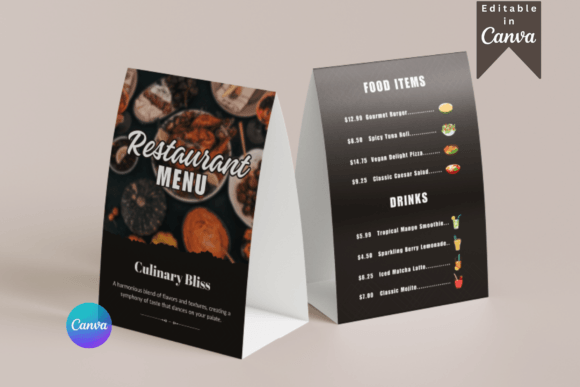
Upon purchasing this comprehensive package, you receive more than just a static file. You get a ready-to-print PDF for immediate high-quality production, high-resolution preview images for your marketing materials, and most importantly, a direct link to a Canva template. This integration with Canva is the game-changer. It puts the power of a graphic design studio into a user-friendly interface, allowing you to tweak, refine, and perfect every single element without needing advanced software skills. Whether you are a seasoned designer working for a client or a small business owner managing your own brand, this tool bridges the gap between professional quality and practical accessibility.
Defining the Visual Personality
When we talk about the "look and feel" of this template, we are discussing more than just aesthetics; we are talking about visual strategy. A well-crafted menu template typically balances modern typography with functional white space. It avoids the clutter that confuses the eye, instead guiding the customer’s gaze naturally from appetizers to entrees. The style leans towards versatility. It isn't so rigid that it only fits a fine-dining bistro, nor is it so casual that it wouldn't suit an upscale café. It strikes a middle ground of professional elegance.
The visual characteristics usually rely on a strong visual hierarchy. This means the most profitable or signature dishes are given prominence through sizing and placement. The personality of the template is one of confidence. It uses clean lines and structured grids to project reliability. For the brand strategist, this is crucial. You want the menu to feel like an extension of your interior design. If your restaurant uses warm lighting and natural wood, the template allows for color palette swaps to match that earthiness. If your vibe is industrial chic, you can adjust the styling to reflect that sharpness. It is a creative font ecosystem within a layout framework, designed to adapt to your specific narrative.
Strategic Applications Beyond the Dining Table
While the primary function is obvious, the utility of a high-quality Customizable Restaurant Menu Template extends into various facets of your brand identity. In the realm of packaging design, for instance, the typography choices you finalize in your menu can be carried over to takeaway bags and coffee cups. This consistency builds recognition. When a customer sees the same sans serif font or elegant serif font on a delivery box as they did on the in-house menu, it reinforces the brand's professionalism.
Furthermore, this template serves as a foundation for your digital presence. Web design and social media graphics require constant content. Instead of reinventing the wheel for every Instagram post, you can export sections of your menu design for "Dish of the Day" features. The template ensures that your editorial design remains consistent across print and pixel. It is an asset that streamlines your workflow, ensuring that whether you are updating a price or launching a seasonal special, the output always looks polished and intentional. It is not just about listing food; it is about marketing an experience.
Practical Guidance for Customization and Pairing
One of the greatest strengths of utilizing a Canva-based design asset is the ease of font pairing. Typography is the voice of your menu. A display font might be perfect for the header "Desserts," but it will be illegible for the description of a crème brûlée. You need to evaluate the project fit by testing how the headline fonts interact with the body text.
Here is a practical approach to getting the most out of this resource:
- Evaluate Readability: Zoom in on the template. Can you read the small print easily? A premium font or template isn't worth the investment if it causes eye strain. Ensure the contrast between the text and the background is sufficient.
- Review Included Styles: Look for variety. Does the template offer a script font or handwritten font option for specials? Having a mix of a sturdy sans serif font for body text and a stylistic header font adds depth to the visual hierarchy.
- Check Commercial Licensing: Since this is a commercial font and template package, you need assurance that you can use it for profit. The beauty of this specific package is that it leverages Canva’s library of free elements, mitigating licensing headaches while still delivering a premium look.
- Test Pairings: Don't be afraid to experiment. If the default serif font feels too traditional for your taco shop, swap it for a rounded, friendly sans-serif. The template is the skeleton; you provide the skin and personality.
Ultimately, this Customizable Restaurant Menu Template